Snake Color Mnemonic
However, coral snakes are mimicked by nonvenomous species with similar coloring, such as the milk snake, whose red bands are not adjacent to its yellow bands. Because these two species of snakes are common in the eastern United States, a variety of rhyming mnemonic s developed in that region, such as "Red touches yellow, kill a fellow; red.
Uncover the truth behind a popular mnemonic for identifying a specific venomous snake. Learn its uses, accuracy, and crucial safety exceptions.
Below are 9 mnemonics related to first aid and survival that can be easily memorized now, and readily pulled out in case of emergency later: To identify venomous snakes: Red on yellow, kill a fellow; red on black, friend of Jack This classic rhyme is a help in differentiating venomous coral snakes from similar looking but nonvenomous king snakes.
A venomous snake is one that can inject venom through its fangs. This venom is a complex biochemical substance that can cause a range of effects, from mild discomfort to severe physiological damage, depending on the snake species and amount of venom injected. Why Identification Matters Identifying whether a snake is venomous is crucial for safety.
Snake Nomenclature Cards (red) - Montessori Print Shop

The venomous coral snake has a non-venomous look-alike called the scarlet king snake. Luckily, these snakes have key differences that make it easy to tell them apart. For instance, coral snakes have red and yellow rings that touch while king snakes have black and red rings that touch. In this article, we'll share the coloring, behavioral, and lifestyle differences between these snakes. Just.
A venomous snake is one that can inject venom through its fangs. This venom is a complex biochemical substance that can cause a range of effects, from mild discomfort to severe physiological damage, depending on the snake species and amount of venom injected. Why Identification Matters Identifying whether a snake is venomous is crucial for safety.
This mnemonic became popular as a quick guide to distinguish dangerous coral snakes from their harmless look-alikes. Reliability of the Saying The rhyme "Red and yellow, kill a fellow; red and black, venom lack" is commonly cited, but its reliability is limited and can be misleading.
Below are 9 mnemonics related to first aid and survival that can be easily memorized now, and readily pulled out in case of emergency later: To identify venomous snakes: Red on yellow, kill a fellow; red on black, friend of Jack This classic rhyme is a help in differentiating venomous coral snakes from similar looking but nonvenomous king snakes.
What Does The Color Amber Look Like - Colorscombo.com
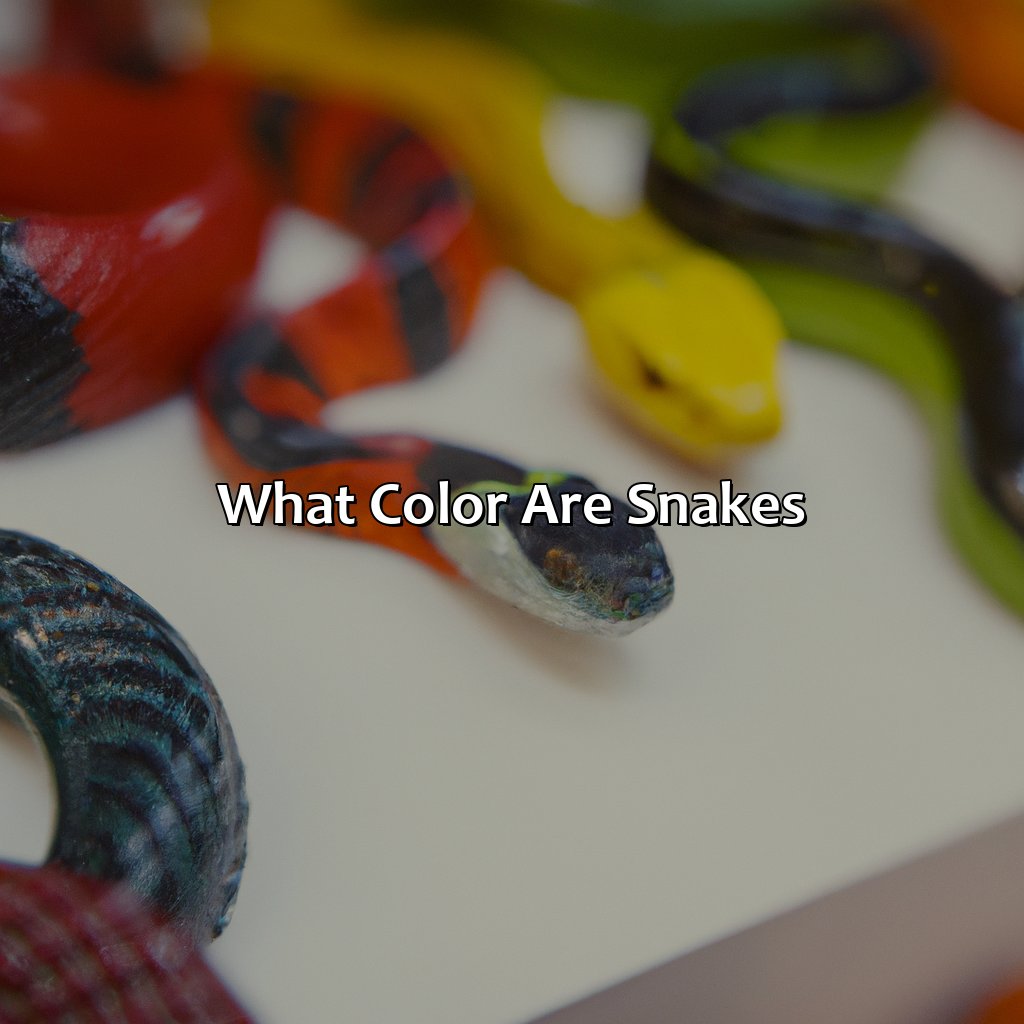
The venomous coral snake has a non-venomous look-alike called the scarlet king snake. Luckily, these snakes have key differences that make it easy to tell them apart. For instance, coral snakes have red and yellow rings that touch while king snakes have black and red rings that touch. In this article, we'll share the coloring, behavioral, and lifestyle differences between these snakes. Just.
The common mnemonic "if red touches yellow" serves as a widely recognized guide for identifying snakes. This simple rhyme highlights specific color patterns that distinguish venomous coral snakes from their non-venomous look-alikes. Accurate identification is a crucial safety measure, as misidentifying a snake can have consequences. Understanding these visual cues helps individuals.
However, coral snakes are mimicked by nonvenomous species with similar coloring, such as the milk snake, whose red bands are not adjacent to its yellow bands. Because these two species of snakes are common in the eastern United States, a variety of rhyming mnemonic s developed in that region, such as "Red touches yellow, kill a fellow; red.
Below are 9 mnemonics related to first aid and survival that can be easily memorized now, and readily pulled out in case of emergency later: To identify venomous snakes: Red on yellow, kill a fellow; red on black, friend of Jack This classic rhyme is a help in differentiating venomous coral snakes from similar looking but nonvenomous king snakes.
9 Lifesaving Mnemonics Every Man Should Know | The Art Of Manliness
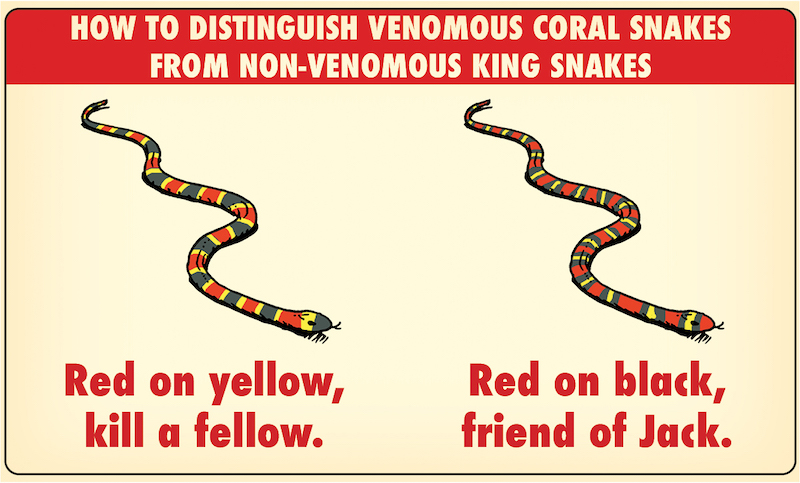
This mnemonic became popular as a quick guide to distinguish dangerous coral snakes from their harmless look-alikes. Reliability of the Saying The rhyme "Red and yellow, kill a fellow; red and black, venom lack" is commonly cited, but its reliability is limited and can be misleading.
Uncover the truth behind a popular mnemonic for identifying a specific venomous snake. Learn its uses, accuracy, and crucial safety exceptions.
Below are 9 mnemonics related to first aid and survival that can be easily memorized now, and readily pulled out in case of emergency later: To identify venomous snakes: Red on yellow, kill a fellow; red on black, friend of Jack This classic rhyme is a help in differentiating venomous coral snakes from similar looking but nonvenomous king snakes.
The venomous coral snake has a non-venomous look-alike called the scarlet king snake. Luckily, these snakes have key differences that make it easy to tell them apart. For instance, coral snakes have red and yellow rings that touch while king snakes have black and red rings that touch. In this article, we'll share the coloring, behavioral, and lifestyle differences between these snakes. Just.
{FREE} Snake Colors Easy Reader Book

However, coral snakes are mimicked by nonvenomous species with similar coloring, such as the milk snake, whose red bands are not adjacent to its yellow bands. Because these two species of snakes are common in the eastern United States, a variety of rhyming mnemonic s developed in that region, such as "Red touches yellow, kill a fellow; red.
The coral snake is the exact opposite of a pit viper in description, and that prompted the creation of a rhyme to distinguish the venomous snake from similar, nonvenomous cousins. The coral snake rhyme varies from person to person, but the general premise is the same: Red touch black, safe for Jack. Red touches yellow, kills a fellow.
Uncover the truth behind a popular mnemonic for identifying a specific venomous snake. Learn its uses, accuracy, and crucial safety exceptions.
A venomous snake is one that can inject venom through its fangs. This venom is a complex biochemical substance that can cause a range of effects, from mild discomfort to severe physiological damage, depending on the snake species and amount of venom injected. Why Identification Matters Identifying whether a snake is venomous is crucial for safety.
Pin By Andrew On Snakes | Coral Snake, Snake Photos, Snake

However, coral snakes are mimicked by nonvenomous species with similar coloring, such as the milk snake, whose red bands are not adjacent to its yellow bands. Because these two species of snakes are common in the eastern United States, a variety of rhyming mnemonic s developed in that region, such as "Red touches yellow, kill a fellow; red.
The coral snake is the exact opposite of a pit viper in description, and that prompted the creation of a rhyme to distinguish the venomous snake from similar, nonvenomous cousins. The coral snake rhyme varies from person to person, but the general premise is the same: Red touch black, safe for Jack. Red touches yellow, kills a fellow.
Below are 9 mnemonics related to first aid and survival that can be easily memorized now, and readily pulled out in case of emergency later: To identify venomous snakes: Red on yellow, kill a fellow; red on black, friend of Jack This classic rhyme is a help in differentiating venomous coral snakes from similar looking but nonvenomous king snakes.
The venomous coral snake has a non-venomous look-alike called the scarlet king snake. Luckily, these snakes have key differences that make it easy to tell them apart. For instance, coral snakes have red and yellow rings that touch while king snakes have black and red rings that touch. In this article, we'll share the coloring, behavioral, and lifestyle differences between these snakes. Just.
Snake Nomenclature Cards (red) - Montessori Print Shop

The venomous coral snake has a non-venomous look-alike called the scarlet king snake. Luckily, these snakes have key differences that make it easy to tell them apart. For instance, coral snakes have red and yellow rings that touch while king snakes have black and red rings that touch. In this article, we'll share the coloring, behavioral, and lifestyle differences between these snakes. Just.
Learn how to identify coral snakes using the "red touch yellow, black" rhyme and distinguish them from other similar.
Coral snakes lethal neurotoxic venom is so infamous that it has a whole rhyme dedicated to it. Discover the coral snake rhyme here.
The common mnemonic "if red touches yellow" serves as a widely recognized guide for identifying snakes. This simple rhyme highlights specific color patterns that distinguish venomous coral snakes from their non-venomous look-alikes. Accurate identification is a crucial safety measure, as misidentifying a snake can have consequences. Understanding these visual cues helps individuals.
How To Tell If A Snake Is A Coral Snake At John Bundy Blog
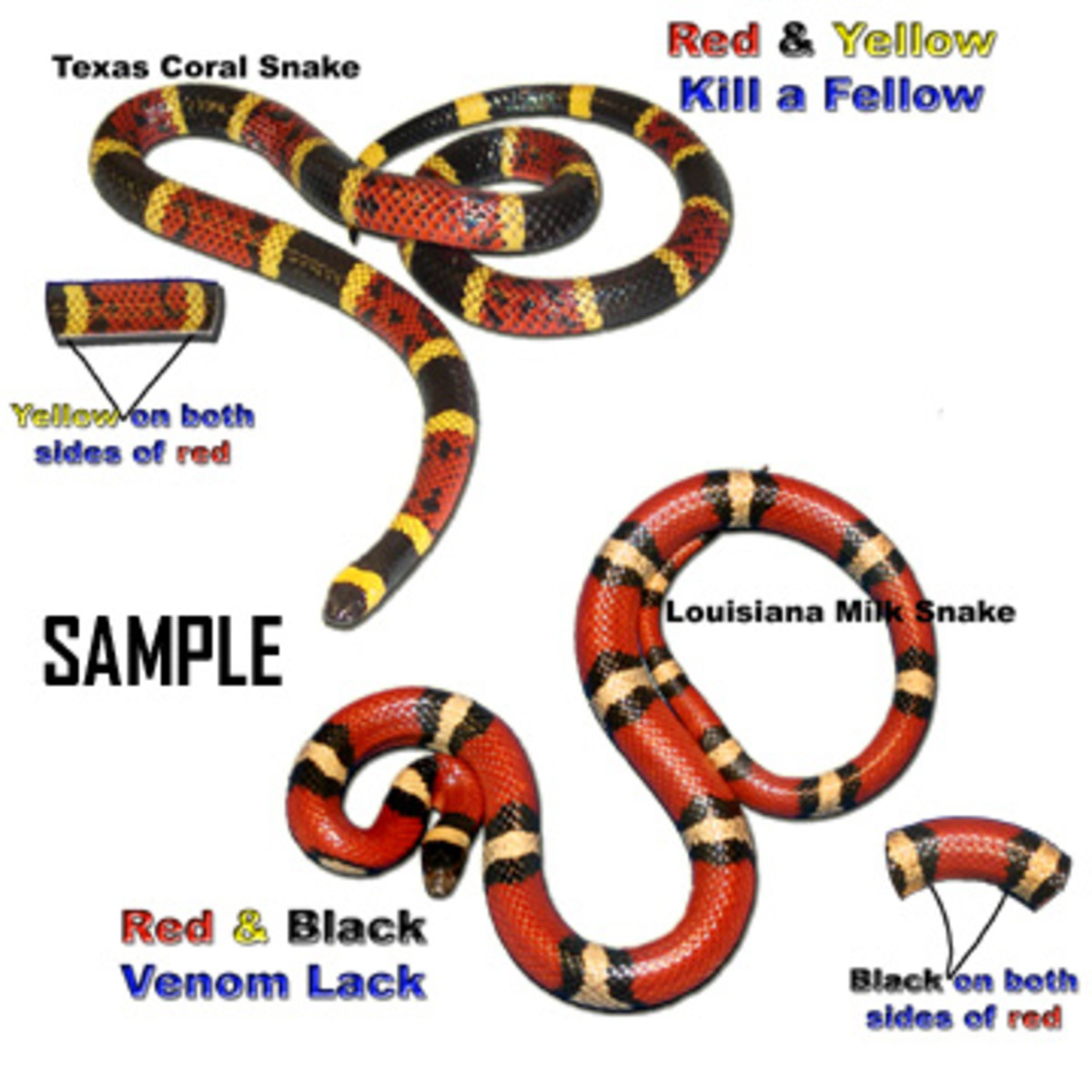
Below are 9 mnemonics related to first aid and survival that can be easily memorized now, and readily pulled out in case of emergency later: To identify venomous snakes: Red on yellow, kill a fellow; red on black, friend of Jack This classic rhyme is a help in differentiating venomous coral snakes from similar looking but nonvenomous king snakes.
Learn how to identify coral snakes using the "red touch yellow, black" rhyme and distinguish them from other similar.
The venomous coral snake has a non-venomous look-alike called the scarlet king snake. Luckily, these snakes have key differences that make it easy to tell them apart. For instance, coral snakes have red and yellow rings that touch while king snakes have black and red rings that touch. In this article, we'll share the coloring, behavioral, and lifestyle differences between these snakes. Just.
Uncover the truth behind a popular mnemonic for identifying a specific venomous snake. Learn its uses, accuracy, and crucial safety exceptions.
RAZ-A 020 Snake Colors | PDF

The coral snake is the exact opposite of a pit viper in description, and that prompted the creation of a rhyme to distinguish the venomous snake from similar, nonvenomous cousins. The coral snake rhyme varies from person to person, but the general premise is the same: Red touch black, safe for Jack. Red touches yellow, kills a fellow.
Below are 9 mnemonics related to first aid and survival that can be easily memorized now, and readily pulled out in case of emergency later: To identify venomous snakes: Red on yellow, kill a fellow; red on black, friend of Jack This classic rhyme is a help in differentiating venomous coral snakes from similar looking but nonvenomous king snakes.
The common mnemonic "if red touches yellow" serves as a widely recognized guide for identifying snakes. This simple rhyme highlights specific color patterns that distinguish venomous coral snakes from their non-venomous look-alikes. Accurate identification is a crucial safety measure, as misidentifying a snake can have consequences. Understanding these visual cues helps individuals.
Learn how to identify coral snakes using the "red touch yellow, black" rhyme and distinguish them from other similar.
How To Identify A Coral Snake

The common mnemonic "if red touches yellow" serves as a widely recognized guide for identifying snakes. This simple rhyme highlights specific color patterns that distinguish venomous coral snakes from their non-venomous look-alikes. Accurate identification is a crucial safety measure, as misidentifying a snake can have consequences. Understanding these visual cues helps individuals.
Below are 9 mnemonics related to first aid and survival that can be easily memorized now, and readily pulled out in case of emergency later: To identify venomous snakes: Red on yellow, kill a fellow; red on black, friend of Jack This classic rhyme is a help in differentiating venomous coral snakes from similar looking but nonvenomous king snakes.
Learn how to identify coral snakes using the "red touch yellow, black" rhyme and distinguish them from other similar.
The coral snake is the exact opposite of a pit viper in description, and that prompted the creation of a rhyme to distinguish the venomous snake from similar, nonvenomous cousins. The coral snake rhyme varies from person to person, but the general premise is the same: Red touch black, safe for Jack. Red touches yellow, kills a fellow.
Sensory Bin Activities: Snakes | Color Activities, Sensory Bins, Preschool Themes

A venomous snake is one that can inject venom through its fangs. This venom is a complex biochemical substance that can cause a range of effects, from mild discomfort to severe physiological damage, depending on the snake species and amount of venom injected. Why Identification Matters Identifying whether a snake is venomous is crucial for safety.
Coral snakes lethal neurotoxic venom is so infamous that it has a whole rhyme dedicated to it. Discover the coral snake rhyme here.
The venomous coral snake has a non-venomous look-alike called the scarlet king snake. Luckily, these snakes have key differences that make it easy to tell them apart. For instance, coral snakes have red and yellow rings that touch while king snakes have black and red rings that touch. In this article, we'll share the coloring, behavioral, and lifestyle differences between these snakes. Just.
Uncover the truth behind a popular mnemonic for identifying a specific venomous snake. Learn its uses, accuracy, and crucial safety exceptions.
Mnemonic Of The Day - Snake Identification And Effects|FMT | Dr. Nikita Nanwani - YouTube

The coral snake is the exact opposite of a pit viper in description, and that prompted the creation of a rhyme to distinguish the venomous snake from similar, nonvenomous cousins. The coral snake rhyme varies from person to person, but the general premise is the same: Red touch black, safe for Jack. Red touches yellow, kills a fellow.
The venomous coral snake has a non-venomous look-alike called the scarlet king snake. Luckily, these snakes have key differences that make it easy to tell them apart. For instance, coral snakes have red and yellow rings that touch while king snakes have black and red rings that touch. In this article, we'll share the coloring, behavioral, and lifestyle differences between these snakes. Just.
However, coral snakes are mimicked by nonvenomous species with similar coloring, such as the milk snake, whose red bands are not adjacent to its yellow bands. Because these two species of snakes are common in the eastern United States, a variety of rhyming mnemonic s developed in that region, such as "Red touches yellow, kill a fellow; red.
Coral snakes lethal neurotoxic venom is so infamous that it has a whole rhyme dedicated to it. Discover the coral snake rhyme here.
Colorful Snake Species

However, coral snakes are mimicked by nonvenomous species with similar coloring, such as the milk snake, whose red bands are not adjacent to its yellow bands. Because these two species of snakes are common in the eastern United States, a variety of rhyming mnemonic s developed in that region, such as "Red touches yellow, kill a fellow; red.
This mnemonic became popular as a quick guide to distinguish dangerous coral snakes from their harmless look-alikes. Reliability of the Saying The rhyme "Red and yellow, kill a fellow; red and black, venom lack" is commonly cited, but its reliability is limited and can be misleading.
The common mnemonic "if red touches yellow" serves as a widely recognized guide for identifying snakes. This simple rhyme highlights specific color patterns that distinguish venomous coral snakes from their non-venomous look-alikes. Accurate identification is a crucial safety measure, as misidentifying a snake can have consequences. Understanding these visual cues helps individuals.
The coral snake is the exact opposite of a pit viper in description, and that prompted the creation of a rhyme to distinguish the venomous snake from similar, nonvenomous cousins. The coral snake rhyme varies from person to person, but the general premise is the same: Red touch black, safe for Jack. Red touches yellow, kills a fellow.
Color-the-snake.pdf

Below are 9 mnemonics related to first aid and survival that can be easily memorized now, and readily pulled out in case of emergency later: To identify venomous snakes: Red on yellow, kill a fellow; red on black, friend of Jack This classic rhyme is a help in differentiating venomous coral snakes from similar looking but nonvenomous king snakes.
The venomous coral snake has a non-venomous look-alike called the scarlet king snake. Luckily, these snakes have key differences that make it easy to tell them apart. For instance, coral snakes have red and yellow rings that touch while king snakes have black and red rings that touch. In this article, we'll share the coloring, behavioral, and lifestyle differences between these snakes. Just.
The common mnemonic "if red touches yellow" serves as a widely recognized guide for identifying snakes. This simple rhyme highlights specific color patterns that distinguish venomous coral snakes from their non-venomous look-alikes. Accurate identification is a crucial safety measure, as misidentifying a snake can have consequences. Understanding these visual cues helps individuals.
However, coral snakes are mimicked by nonvenomous species with similar coloring, such as the milk snake, whose red bands are not adjacent to its yellow bands. Because these two species of snakes are common in the eastern United States, a variety of rhyming mnemonic s developed in that region, such as "Red touches yellow, kill a fellow; red.
Micrurus Fulvius - Eastern Coral Snake - USA Snakes
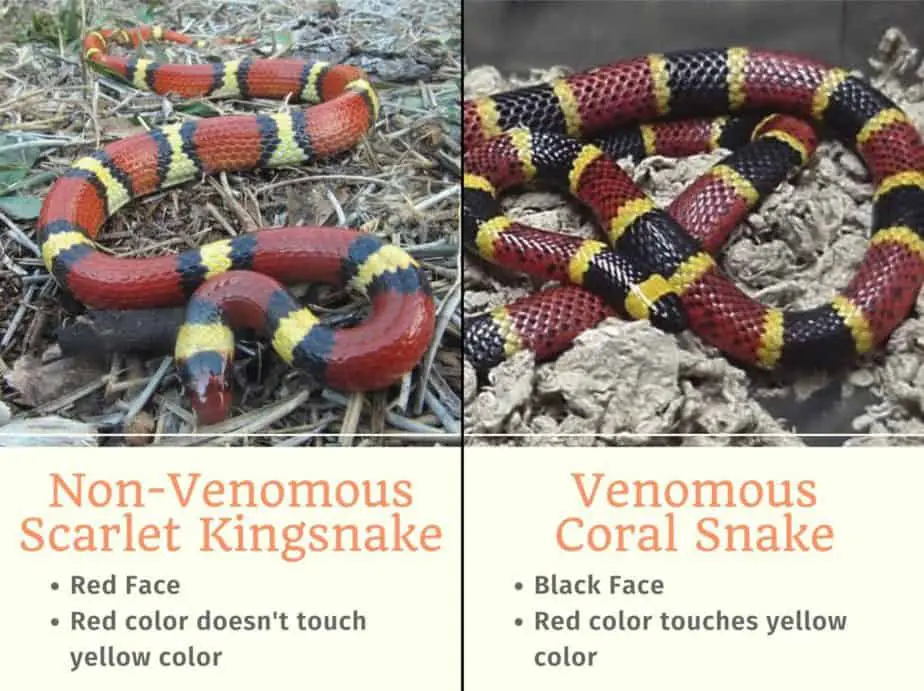
Learn how to identify coral snakes using the "red touch yellow, black" rhyme and distinguish them from other similar.
Uncover the truth behind a popular mnemonic for identifying a specific venomous snake. Learn its uses, accuracy, and crucial safety exceptions.
The coral snake is the exact opposite of a pit viper in description, and that prompted the creation of a rhyme to distinguish the venomous snake from similar, nonvenomous cousins. The coral snake rhyme varies from person to person, but the general premise is the same: Red touch black, safe for Jack. Red touches yellow, kills a fellow.
This mnemonic became popular as a quick guide to distinguish dangerous coral snakes from their harmless look-alikes. Reliability of the Saying The rhyme "Red and yellow, kill a fellow; red and black, venom lack" is commonly cited, but its reliability is limited and can be misleading.
{FREE} Snake Colors Easy Reader Book

Uncover the truth behind a popular mnemonic for identifying a specific venomous snake. Learn its uses, accuracy, and crucial safety exceptions.
The venomous coral snake has a non-venomous look-alike called the scarlet king snake. Luckily, these snakes have key differences that make it easy to tell them apart. For instance, coral snakes have red and yellow rings that touch while king snakes have black and red rings that touch. In this article, we'll share the coloring, behavioral, and lifestyle differences between these snakes. Just.
The common mnemonic "if red touches yellow" serves as a widely recognized guide for identifying snakes. This simple rhyme highlights specific color patterns that distinguish venomous coral snakes from their non-venomous look-alikes. Accurate identification is a crucial safety measure, as misidentifying a snake can have consequences. Understanding these visual cues helps individuals.
This mnemonic became popular as a quick guide to distinguish dangerous coral snakes from their harmless look-alikes. Reliability of the Saying The rhyme "Red and yellow, kill a fellow; red and black, venom lack" is commonly cited, but its reliability is limited and can be misleading.
The common mnemonic "if red touches yellow" serves as a widely recognized guide for identifying snakes. This simple rhyme highlights specific color patterns that distinguish venomous coral snakes from their non-venomous look-alikes. Accurate identification is a crucial safety measure, as misidentifying a snake can have consequences. Understanding these visual cues helps individuals.
Learn how to identify coral snakes using the "red touch yellow, black" rhyme and distinguish them from other similar.
The venomous coral snake has a non-venomous look-alike called the scarlet king snake. Luckily, these snakes have key differences that make it easy to tell them apart. For instance, coral snakes have red and yellow rings that touch while king snakes have black and red rings that touch. In this article, we'll share the coloring, behavioral, and lifestyle differences between these snakes. Just.
Below are 9 mnemonics related to first aid and survival that can be easily memorized now, and readily pulled out in case of emergency later: To identify venomous snakes: Red on yellow, kill a fellow; red on black, friend of Jack This classic rhyme is a help in differentiating venomous coral snakes from similar looking but nonvenomous king snakes.
Uncover the truth behind a popular mnemonic for identifying a specific venomous snake. Learn its uses, accuracy, and crucial safety exceptions.
However, coral snakes are mimicked by nonvenomous species with similar coloring, such as the milk snake, whose red bands are not adjacent to its yellow bands. Because these two species of snakes are common in the eastern United States, a variety of rhyming mnemonic s developed in that region, such as "Red touches yellow, kill a fellow; red.
Coral snakes lethal neurotoxic venom is so infamous that it has a whole rhyme dedicated to it. Discover the coral snake rhyme here.
A venomous snake is one that can inject venom through its fangs. This venom is a complex biochemical substance that can cause a range of effects, from mild discomfort to severe physiological damage, depending on the snake species and amount of venom injected. Why Identification Matters Identifying whether a snake is venomous is crucial for safety.
This mnemonic became popular as a quick guide to distinguish dangerous coral snakes from their harmless look-alikes. Reliability of the Saying The rhyme "Red and yellow, kill a fellow; red and black, venom lack" is commonly cited, but its reliability is limited and can be misleading.
The coral snake is the exact opposite of a pit viper in description, and that prompted the creation of a rhyme to distinguish the venomous snake from similar, nonvenomous cousins. The coral snake rhyme varies from person to person, but the general premise is the same: Red touch black, safe for Jack. Red touches yellow, kills a fellow.