Monkey Color Spectrum
Discover the fascinating world of monkey color perception and find out if these animals are truly colorblind. Explore the latest research and understanding of how monkeys see the world through their eyes.
Monkey Opsins Humans have trichromatic vision. Our eyes detect colors in the visible range of the spectrum using three different cone cell types, each maximally stimulated by a different wavelength of light.
Color plays a crucial role in monkey communication, serving as a vital tool for conveying information and expressing emotions. In the wild, monkeys use color to signal aggression, fear, or friendliness, allowing them to navigate their social hierarchies and avoid potential threats. For example, the mandrill, a species of monkey found in central Africa, uses bright facial colors to signal.
Let's start by exploring the basics. Just like us humans, monkeys have color vision, but their perception differs slightly from ours. While humans have trichromatic vision, meaning we have three types of color receptors in our eyes, monkeys have what is known as trichromatic or dichromatic vision, depending on the species.
Set Monkey Color Portraits Vector Illustration Stock Vector (Royalty Free) 295328960 | Shutterstock

A Spectrum of Sight: Monkey Color Vision Monkey species exhibit a fascinating range of color vision capabilities, largely depending on whether they are Old World or New World monkeys. Old World monkeys, such as macaques and baboons, generally possess trichromatic vision, much like humans.
Monkey Opsins Humans have trichromatic vision. Our eyes detect colors in the visible range of the spectrum using three different cone cell types, each maximally stimulated by a different wavelength of light.
Let's start by exploring the basics. Just like us humans, monkeys have color vision, but their perception differs slightly from ours. While humans have trichromatic vision, meaning we have three types of color receptors in our eyes, monkeys have what is known as trichromatic or dichromatic vision, depending on the species.
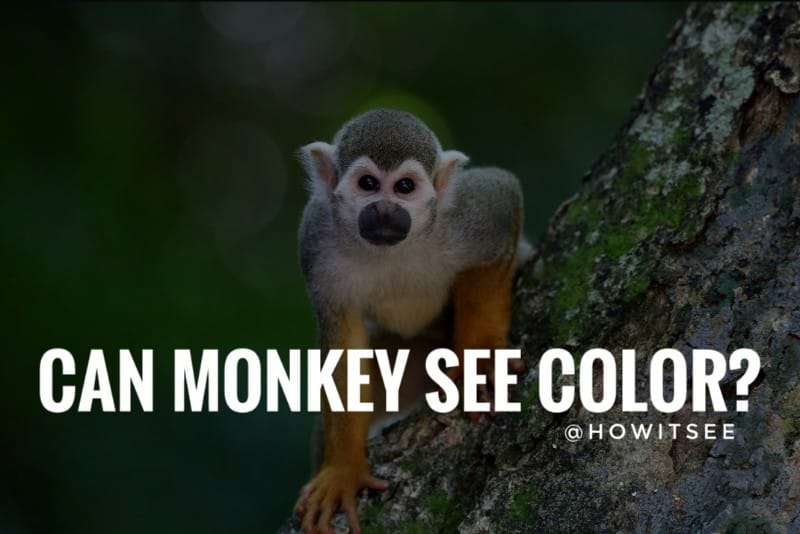
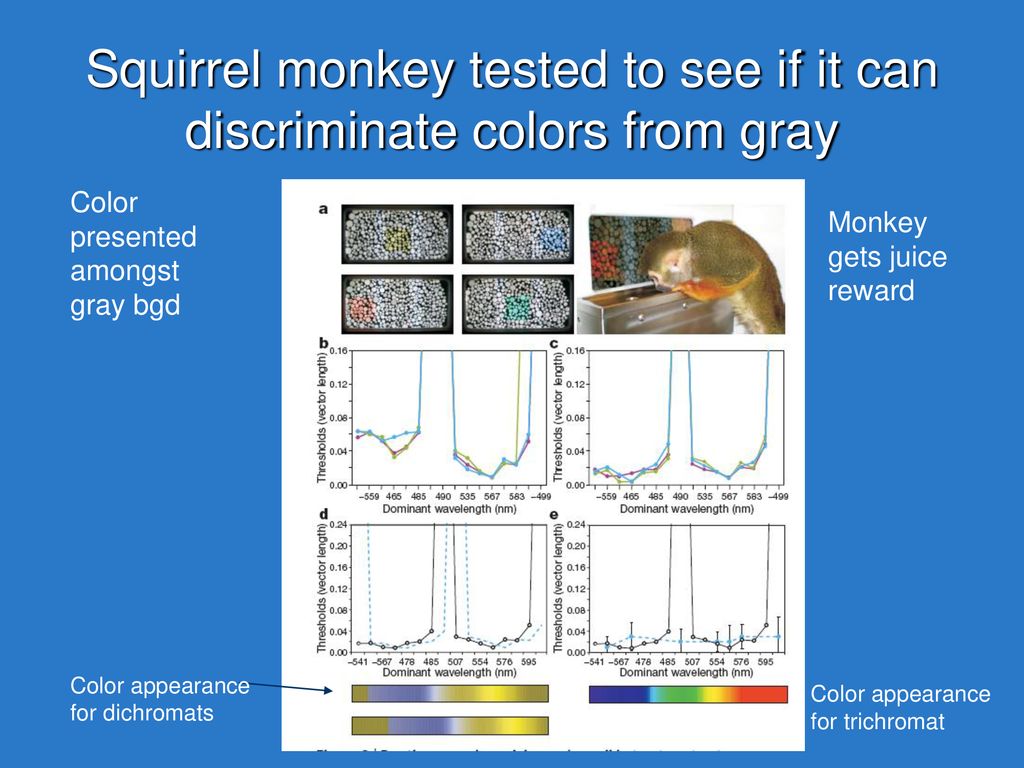
Similarly, many New World monkeys can also see the visible spectrum and differentiate the millions of color shades like humans. In contrast, some New World monkeys, like squirrel monkeys, have dichromatic vision. It means they can mostly see in blue and green.
Exploring The Wonders: Can Monkeys See Color? | PetShun

Monkey Opsins Humans have trichromatic vision. Our eyes detect colors in the visible range of the spectrum using three different cone cell types, each maximally stimulated by a different wavelength of light.
Abstract It is often assumed that all Old World monkeys share the same trichromatic colour vision, but the evidence in support of this conclusion is sparse as only a small fraction of all Old World monkey species have been tested. To address this issue, spectral sensitivity functions were measured in animals from eight species of Old World monkey (five cercopithecine species and three colobine.
Old World monkeys, native to Africa and Asia, generally have trichromatic vision, equipped with three types of cone cells that allow them to perceive a full spectrum of colors, including red, green, and blue. In some New World monkey species, a unique phenomenon called polymorphic trichromacy occurs.
Chimpanzees, like humans, are trichromatic, allowing them to pick up on the same spectrum of color we see. Every howler monkey is trichromatic, while the owl monkey is monochromatic, seeing only in black and white. Baboons, like other old world monkeys and apes, have eyes that can discern blue, green, and red wavelengths of light.
Can Monkeys See Color? Monkey Vision Explained (Updated) - HowitSee
Monkey Opsins Humans have trichromatic vision. Our eyes detect colors in the visible range of the spectrum using three different cone cell types, each maximally stimulated by a different wavelength of light.
A Spectrum of Sight: Monkey Color Vision Monkey species exhibit a fascinating range of color vision capabilities, largely depending on whether they are Old World or New World monkeys. Old World monkeys, such as macaques and baboons, generally possess trichromatic vision, much like humans.
What color do monkeys see? Every howler monkey, for example, is trichromatic. The owl monkey is monochromatic, seeing only in black and white. Among tamarins and spider monkeys, all males are dichromats-they can't perceive reds or greens. But females split 60.
Abstract It is often assumed that all Old World monkeys share the same trichromatic colour vision, but the evidence in support of this conclusion is sparse as only a small fraction of all Old World monkey species have been tested. To address this issue, spectral sensitivity functions were measured in animals from eight species of Old World monkey (five cercopithecine species and three colobine.
Amazon.com: Color Monkeys Laminated Chart : Office Products

What color do monkeys see? Every howler monkey, for example, is trichromatic. The owl monkey is monochromatic, seeing only in black and white. Among tamarins and spider monkeys, all males are dichromats-they can't perceive reds or greens. But females split 60.
Discover the fascinating world of monkey color perception and find out if these animals are truly colorblind. Explore the latest research and understanding of how monkeys see the world through their eyes.
Chimpanzees, like humans, are trichromatic, allowing them to pick up on the same spectrum of color we see. Every howler monkey is trichromatic, while the owl monkey is monochromatic, seeing only in black and white. Baboons, like other old world monkeys and apes, have eyes that can discern blue, green, and red wavelengths of light.
Let's start by exploring the basics. Just like us humans, monkeys have color vision, but their perception differs slightly from ours. While humans have trichromatic vision, meaning we have three types of color receptors in our eyes, monkeys have what is known as trichromatic or dichromatic vision, depending on the species.
The Genetics Of New World Monkey Visual Pigments.

What color do monkeys see? Every howler monkey, for example, is trichromatic. The owl monkey is monochromatic, seeing only in black and white. Among tamarins and spider monkeys, all males are dichromats-they can't perceive reds or greens. But females split 60.
Discover the fascinating world of monkey color perception and find out if these animals are truly colorblind. Explore the latest research and understanding of how monkeys see the world through their eyes.
A Spectrum of Sight: Monkey Color Vision Monkey species exhibit a fascinating range of color vision capabilities, largely depending on whether they are Old World or New World monkeys. Old World monkeys, such as macaques and baboons, generally possess trichromatic vision, much like humans.
Chimpanzees, like humans, are trichromatic, allowing them to pick up on the same spectrum of color we see. Every howler monkey is trichromatic, while the owl monkey is monochromatic, seeing only in black and white. Baboons, like other old world monkeys and apes, have eyes that can discern blue, green, and red wavelengths of light.
Lecture 6 : More Trees 9/21/ Ppt Download
What color do monkeys see? Every howler monkey, for example, is trichromatic. The owl monkey is monochromatic, seeing only in black and white. Among tamarins and spider monkeys, all males are dichromats-they can't perceive reds or greens. But females split 60.
Chimpanzees, like humans, are trichromatic, allowing them to pick up on the same spectrum of color we see. Every howler monkey is trichromatic, while the owl monkey is monochromatic, seeing only in black and white. Baboons, like other old world monkeys and apes, have eyes that can discern blue, green, and red wavelengths of light.
Abstract It is often assumed that all Old World monkeys share the same trichromatic colour vision, but the evidence in support of this conclusion is sparse as only a small fraction of all Old World monkey species have been tested. To address this issue, spectral sensitivity functions were measured in animals from eight species of Old World monkey (five cercopithecine species and three colobine.
A Spectrum of Sight: Monkey Color Vision Monkey species exhibit a fascinating range of color vision capabilities, largely depending on whether they are Old World or New World monkeys. Old World monkeys, such as macaques and baboons, generally possess trichromatic vision, much like humans.
The Evolution Of Color Vision In Monkeys | NSTA

Old World monkeys, native to Africa and Asia, generally have trichromatic vision, equipped with three types of cone cells that allow them to perceive a full spectrum of colors, including red, green, and blue. In some New World monkey species, a unique phenomenon called polymorphic trichromacy occurs.
Color plays a crucial role in monkey communication, serving as a vital tool for conveying information and expressing emotions. In the wild, monkeys use color to signal aggression, fear, or friendliness, allowing them to navigate their social hierarchies and avoid potential threats. For example, the mandrill, a species of monkey found in central Africa, uses bright facial colors to signal.
A Spectrum of Sight: Monkey Color Vision Monkey species exhibit a fascinating range of color vision capabilities, largely depending on whether they are Old World or New World monkeys. Old World monkeys, such as macaques and baboons, generally possess trichromatic vision, much like humans.
Chimpanzees, like humans, are trichromatic, allowing them to pick up on the same spectrum of color we see. Every howler monkey is trichromatic, while the owl monkey is monochromatic, seeing only in black and white. Baboons, like other old world monkeys and apes, have eyes that can discern blue, green, and red wavelengths of light.
The Genetics Of New World Monkey Visual Pigments.

What color do monkeys see? Every howler monkey, for example, is trichromatic. The owl monkey is monochromatic, seeing only in black and white. Among tamarins and spider monkeys, all males are dichromats-they can't perceive reds or greens. But females split 60.
Discover the fascinating world of monkey color perception and find out if these animals are truly colorblind. Explore the latest research and understanding of how monkeys see the world through their eyes.
Chimpanzees, like humans, are trichromatic, allowing them to pick up on the same spectrum of color we see. Every howler monkey is trichromatic, while the owl monkey is monochromatic, seeing only in black and white. Baboons, like other old world monkeys and apes, have eyes that can discern blue, green, and red wavelengths of light.
Old World monkeys, native to Africa and Asia, generally have trichromatic vision, equipped with three types of cone cells that allow them to perceive a full spectrum of colors, including red, green, and blue. In some New World monkey species, a unique phenomenon called polymorphic trichromacy occurs.
Monkey Color Scheme » Animal » SchemeColor.com
Color plays a crucial role in monkey communication, serving as a vital tool for conveying information and expressing emotions. In the wild, monkeys use color to signal aggression, fear, or friendliness, allowing them to navigate their social hierarchies and avoid potential threats. For example, the mandrill, a species of monkey found in central Africa, uses bright facial colors to signal.
Discover the fascinating world of monkey color perception and find out if these animals are truly colorblind. Explore the latest research and understanding of how monkeys see the world through their eyes.
Monkey Opsins Humans have trichromatic vision. Our eyes detect colors in the visible range of the spectrum using three different cone cell types, each maximally stimulated by a different wavelength of light.
Let's start by exploring the basics. Just like us humans, monkeys have color vision, but their perception differs slightly from ours. While humans have trichromatic vision, meaning we have three types of color receptors in our eyes, monkeys have what is known as trichromatic or dichromatic vision, depending on the species.
The Astonishing Array Of Eye Colors Found In Monkeys | PetShun

Discover the fascinating world of monkey color perception and find out if these animals are truly colorblind. Explore the latest research and understanding of how monkeys see the world through their eyes.
Color plays a crucial role in monkey communication, serving as a vital tool for conveying information and expressing emotions. In the wild, monkeys use color to signal aggression, fear, or friendliness, allowing them to navigate their social hierarchies and avoid potential threats. For example, the mandrill, a species of monkey found in central Africa, uses bright facial colors to signal.
What color do monkeys see? Every howler monkey, for example, is trichromatic. The owl monkey is monochromatic, seeing only in black and white. Among tamarins and spider monkeys, all males are dichromats-they can't perceive reds or greens. But females split 60.
Old World monkeys, native to Africa and Asia, generally have trichromatic vision, equipped with three types of cone cells that allow them to perceive a full spectrum of colors, including red, green, and blue. In some New World monkey species, a unique phenomenon called polymorphic trichromacy occurs.
Bliss Monkey Co Color Mixing Chart Poster Learn Color Mixing | Desertcart KUWAIT

Discover the fascinating world of monkey color perception and find out if these animals are truly colorblind. Explore the latest research and understanding of how monkeys see the world through their eyes.
Abstract It is often assumed that all Old World monkeys share the same trichromatic colour vision, but the evidence in support of this conclusion is sparse as only a small fraction of all Old World monkey species have been tested. To address this issue, spectral sensitivity functions were measured in animals from eight species of Old World monkey (five cercopithecine species and three colobine.
What color do monkeys see? Every howler monkey, for example, is trichromatic. The owl monkey is monochromatic, seeing only in black and white. Among tamarins and spider monkeys, all males are dichromats-they can't perceive reds or greens. But females split 60.
A Spectrum of Sight: Monkey Color Vision Monkey species exhibit a fascinating range of color vision capabilities, largely depending on whether they are Old World or New World monkeys. Old World monkeys, such as macaques and baboons, generally possess trichromatic vision, much like humans.
Color Palette Inspired By Monkey Wildlife

Similarly, many New World monkeys can also see the visible spectrum and differentiate the millions of color shades like humans. In contrast, some New World monkeys, like squirrel monkeys, have dichromatic vision. It means they can mostly see in blue and green.
Let's start by exploring the basics. Just like us humans, monkeys have color vision, but their perception differs slightly from ours. While humans have trichromatic vision, meaning we have three types of color receptors in our eyes, monkeys have what is known as trichromatic or dichromatic vision, depending on the species.
Abstract It is often assumed that all Old World monkeys share the same trichromatic colour vision, but the evidence in support of this conclusion is sparse as only a small fraction of all Old World monkey species have been tested. To address this issue, spectral sensitivity functions were measured in animals from eight species of Old World monkey (five cercopithecine species and three colobine.
What color do monkeys see? Every howler monkey, for example, is trichromatic. The owl monkey is monochromatic, seeing only in black and white. Among tamarins and spider monkeys, all males are dichromats-they can't perceive reds or greens. But females split 60.
Colorful Monkey, Vibrant Neon Colors, Artwork, Poster Stock Illustration | Adobe Stock
A Spectrum of Sight: Monkey Color Vision Monkey species exhibit a fascinating range of color vision capabilities, largely depending on whether they are Old World or New World monkeys. Old World monkeys, such as macaques and baboons, generally possess trichromatic vision, much like humans.
Chimpanzees, like humans, are trichromatic, allowing them to pick up on the same spectrum of color we see. Every howler monkey is trichromatic, while the owl monkey is monochromatic, seeing only in black and white. Baboons, like other old world monkeys and apes, have eyes that can discern blue, green, and red wavelengths of light.
Color plays a crucial role in monkey communication, serving as a vital tool for conveying information and expressing emotions. In the wild, monkeys use color to signal aggression, fear, or friendliness, allowing them to navigate their social hierarchies and avoid potential threats. For example, the mandrill, a species of monkey found in central Africa, uses bright facial colors to signal.
What color do monkeys see? Every howler monkey, for example, is trichromatic. The owl monkey is monochromatic, seeing only in black and white. Among tamarins and spider monkeys, all males are dichromats-they can't perceive reds or greens. But females split 60.
Color Patterns Of Monkey Faces Reflect Social Order | Monkey Face, Primates, Monkey

Discover the fascinating world of monkey color perception and find out if these animals are truly colorblind. Explore the latest research and understanding of how monkeys see the world through their eyes.
What color do monkeys see? Every howler monkey, for example, is trichromatic. The owl monkey is monochromatic, seeing only in black and white. Among tamarins and spider monkeys, all males are dichromats-they can't perceive reds or greens. But females split 60.
Similarly, many New World monkeys can also see the visible spectrum and differentiate the millions of color shades like humans. In contrast, some New World monkeys, like squirrel monkeys, have dichromatic vision. It means they can mostly see in blue and green.
Abstract It is often assumed that all Old World monkeys share the same trichromatic colour vision, but the evidence in support of this conclusion is sparse as only a small fraction of all Old World monkey species have been tested. To address this issue, spectral sensitivity functions were measured in animals from eight species of Old World monkey (five cercopithecine species and three colobine.
Evolution Examples Lactase Persistence. - Ppt Download

Let's start by exploring the basics. Just like us humans, monkeys have color vision, but their perception differs slightly from ours. While humans have trichromatic vision, meaning we have three types of color receptors in our eyes, monkeys have what is known as trichromatic or dichromatic vision, depending on the species.
Monkey Opsins Humans have trichromatic vision. Our eyes detect colors in the visible range of the spectrum using three different cone cell types, each maximally stimulated by a different wavelength of light.
Chimpanzees, like humans, are trichromatic, allowing them to pick up on the same spectrum of color we see. Every howler monkey is trichromatic, while the owl monkey is monochromatic, seeing only in black and white. Baboons, like other old world monkeys and apes, have eyes that can discern blue, green, and red wavelengths of light.
Color plays a crucial role in monkey communication, serving as a vital tool for conveying information and expressing emotions. In the wild, monkeys use color to signal aggression, fear, or friendliness, allowing them to navigate their social hierarchies and avoid potential threats. For example, the mandrill, a species of monkey found in central Africa, uses bright facial colors to signal.
Abstract It is often assumed that all Old World monkeys share the same trichromatic colour vision, but the evidence in support of this conclusion is sparse as only a small fraction of all Old World monkey species have been tested. To address this issue, spectral sensitivity functions were measured in animals from eight species of Old World monkey (five cercopithecine species and three colobine.
Color plays a crucial role in monkey communication, serving as a vital tool for conveying information and expressing emotions. In the wild, monkeys use color to signal aggression, fear, or friendliness, allowing them to navigate their social hierarchies and avoid potential threats. For example, the mandrill, a species of monkey found in central Africa, uses bright facial colors to signal.
Monkey Opsins Humans have trichromatic vision. Our eyes detect colors in the visible range of the spectrum using three different cone cell types, each maximally stimulated by a different wavelength of light.
Discover the fascinating world of monkey color perception and find out if these animals are truly colorblind. Explore the latest research and understanding of how monkeys see the world through their eyes.
What color do monkeys see? Every howler monkey, for example, is trichromatic. The owl monkey is monochromatic, seeing only in black and white. Among tamarins and spider monkeys, all males are dichromats-they can't perceive reds or greens. But females split 60.
Chimpanzees, like humans, are trichromatic, allowing them to pick up on the same spectrum of color we see. Every howler monkey is trichromatic, while the owl monkey is monochromatic, seeing only in black and white. Baboons, like other old world monkeys and apes, have eyes that can discern blue, green, and red wavelengths of light.
A Spectrum of Sight: Monkey Color Vision Monkey species exhibit a fascinating range of color vision capabilities, largely depending on whether they are Old World or New World monkeys. Old World monkeys, such as macaques and baboons, generally possess trichromatic vision, much like humans.
Old World monkeys, native to Africa and Asia, generally have trichromatic vision, equipped with three types of cone cells that allow them to perceive a full spectrum of colors, including red, green, and blue. In some New World monkey species, a unique phenomenon called polymorphic trichromacy occurs.
Let's start by exploring the basics. Just like us humans, monkeys have color vision, but their perception differs slightly from ours. While humans have trichromatic vision, meaning we have three types of color receptors in our eyes, monkeys have what is known as trichromatic or dichromatic vision, depending on the species.
Similarly, many New World monkeys can also see the visible spectrum and differentiate the millions of color shades like humans. In contrast, some New World monkeys, like squirrel monkeys, have dichromatic vision. It means they can mostly see in blue and green.